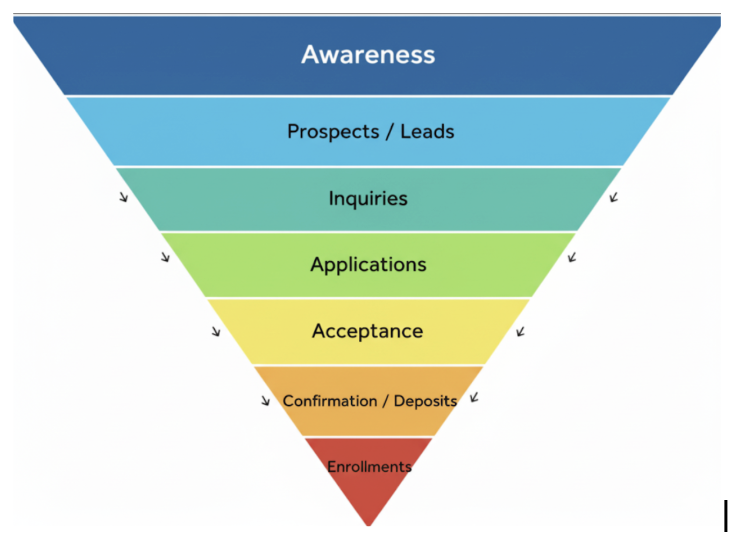
In the high-stakes world of student recruitment, universities are wasting billions of dollars each year due to a critical “attribution gap.” The modern student journey is a long and complex path, often spanning over a year and across dozens of digital and in-person touchpoints, making it nearly impossible to know which initiatives truly lead to enrollment. This article breaks down why traditional marketing measurement is failing in the unique context of higher education and proposes a new, integrated approach to tracking that allows institutions to stop guessing, invest with confidence, and maximize their recruitment success.
Attribution remains a core challenge in international digital marketing campaigns for international students. (Attribution is the measure of the cause or source of sales or conversions.) There are two reasons for this:
- Long Conversion Process – The average student takes 6-18 months between the initial spark, completing their application and enrolling, so it takes a while to see the result.
- Fragmented Journey and Multiple Resources – Students use multiple resources at different stages of the funnel – there is no central system to analyse all the data.
Because of these it is challenging to know what led to different students finally enrolling in a university.
Activity A might result in 10,000 views and 100 applications and 2 enrolments, and activity B can result in 1,000 leads, 15 applications and 10 enrolments. There might also be activity C with 800 views, 30 applications, but 0 enrolments because of a problem in the funnel, that if fixed, could have resulted in 15 enrolments.
Additionally, students are applying to at least 5 universities and so they are not just in one funnel but in multiple competing funnels.
If we can’t measure performance then we usually end up measuring performativeness (activity) instead. These are metrics that show activity and engagement. They are often easy to track and look impressive in reports, but they don’t directly represent a successful enrollment. They measure the process, not the outcome.
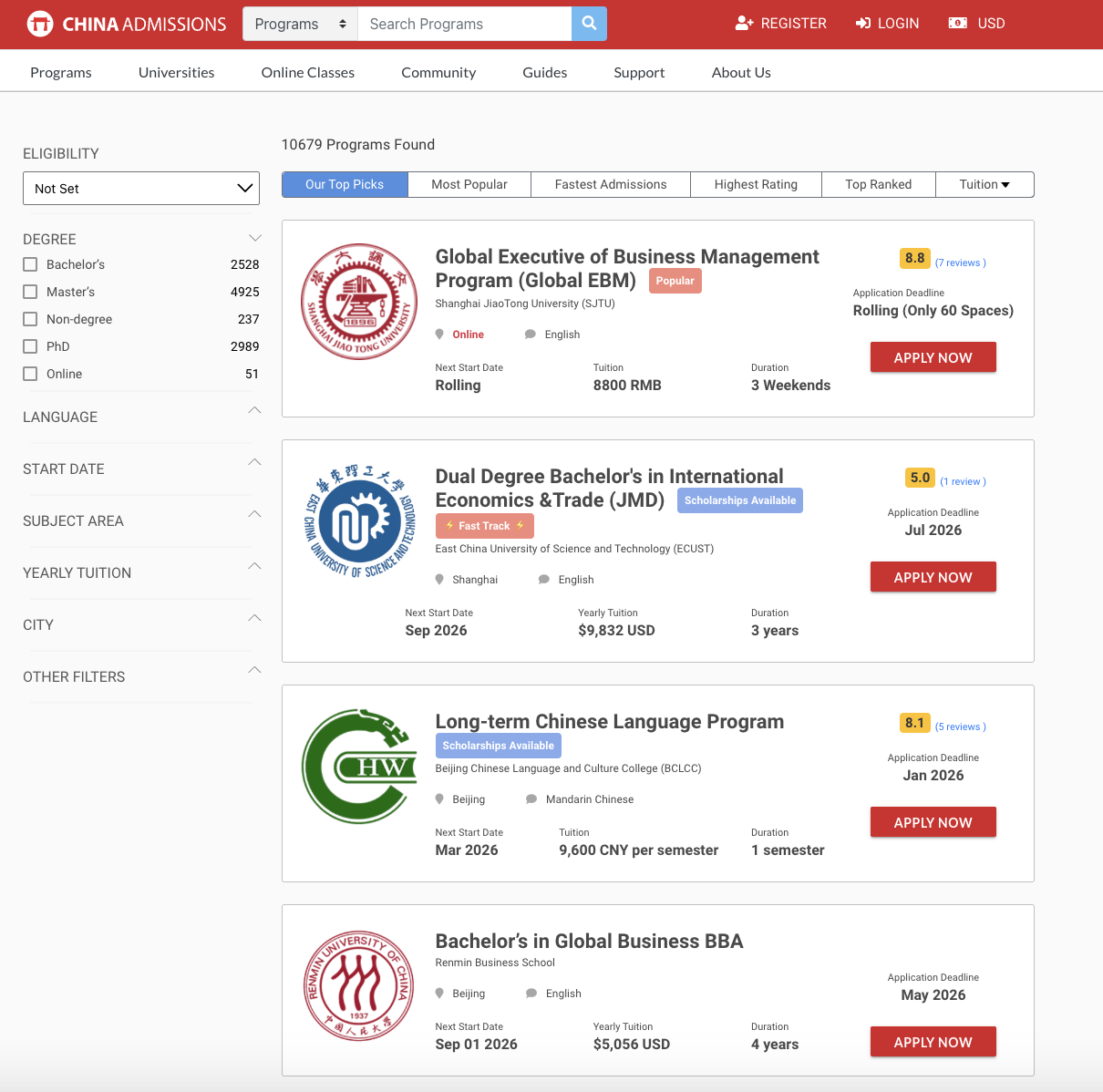
China Admissions is an online platform and a helpful resource for students to research, find information and research about programs.
Effectiveness at the bottom funnel is more about 1 on 1, personalised support, deadlines, special offers, and clear processes and social proof and this is dependent on the university process.
Branding is extremely valuable but very difficult to measure. A strong brand helps attract new students at the top of the funnel, but also helps students to convert easier once they have applied.
It is important to note that bottom of funnel problems, such as slow processing of admissions, lack of contact, or continually selling the benefits of the university, interview experience, might result in students not continuing. This gap and missed opportunities is impossible to track because it is invisible.
Online Vs In-Person Events
All students are doing online research now.
In person events are valuable to meet some students but it is impossible to reach the majority of the market through in-person events. And for those who do go to in-person events, they will also do research online throughout the process.
If we look at online shopping – live shopping on TikTok and online education courses sales from the online education industry, we know that online webinars are extremely effective at converting and driving sales.
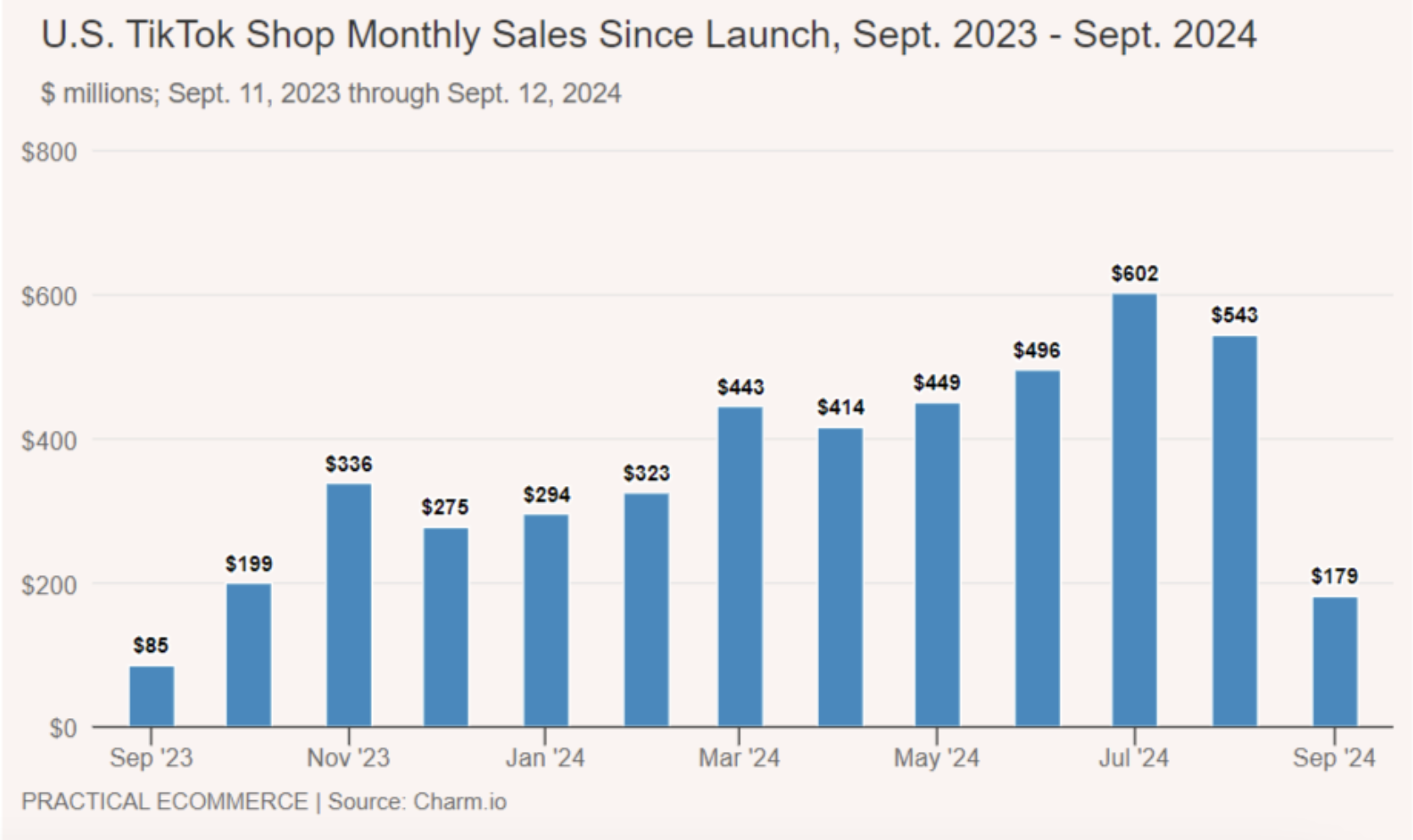
In the US, TikTok Shop sales have increased 120% compared to the same period last year. Source.
Tiktok Shop shows that customers are prepared to discover and buy online. Tiktok works so well, because it has a closed loop of attribution.
Students also research and discover programs online, but it is not as easy to measure results because of the attribution problem.
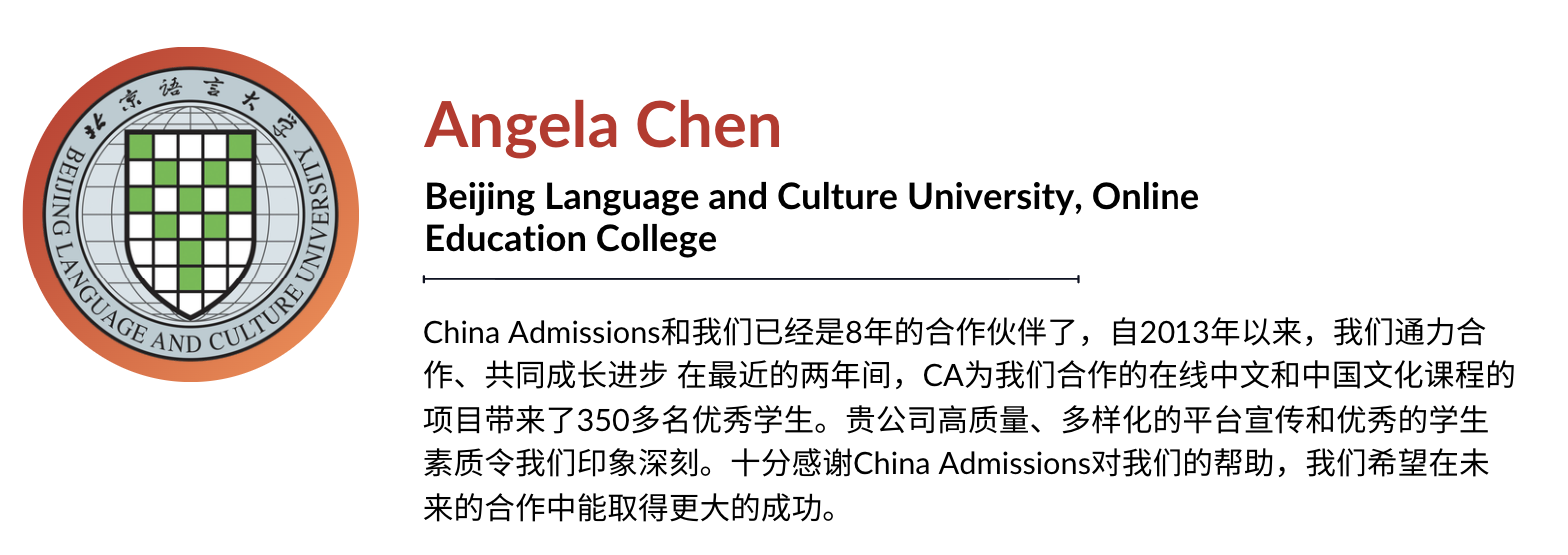
We have been driving thousands of sales for online education courses, where online webinars are essential for letting students know and discover the programs.
 .
.
Online Marketing Vs Education Agents
In-country in-person education agents help with the attribution challenge for students whose native language is not English because they effectively manage this entire process by translating the material into the students native language. They become their emotional support and translator and guide.
However the education agents has limitations – it is most effective where the language is different and there is a large market – eg., India, China or Indonesia. The problem is that an over-reliance of agents can lead to less diverse student bodies, and changes if the market needs and demographics changes.
English speaking students or European students do not have a culture of agents and students are more expecting to be able to go online to find the information and take action. The top students whose native language is not English but they are highly proficient and comfortable in English are also more likely to do their own research, so an agent only model also misses out on native English speaking and European students and the top non-native English students.
Conclusion & Solutions
Students are increasingly doing research on google, youtube, social media and AI, and content creation is essential for appearing in AI search results.
It is necessary to track the entire funnel as much as possible to solve the attribution problem, but also to do deep analysis of each student.
One solution is to have one central system that tracks and measures each stage of the process, CRM, marketing, emails and socials are all connected together will give a huge competitive advantage. However, no such central system exists in 2025.
It is therefore necessary to have a stack of systems. What are the necessary components of this stack?
- A Central CRM
- Track Website Traffic
- Automate Your Marketing and Nurture Leads
- Analyze Search Trends and Competitors
- Host Engaging Online Webinars and Virtual Fairs
- Visualize Website User Behavior
- Standardize Your Ad Tracking.
- Deep Dives
- Feedback loops
For the long term it is essential for universities to continue to develop the digital branding and online admissions process, to break down the process, to build digital assets and resources. Competitive analysis, webinars, guides, reports, and high quality content that can be found by target students and deep dives with students when they have enrolled.
Attribution Models
There are a few types of attribution methods in digital marketing in e-commerce.
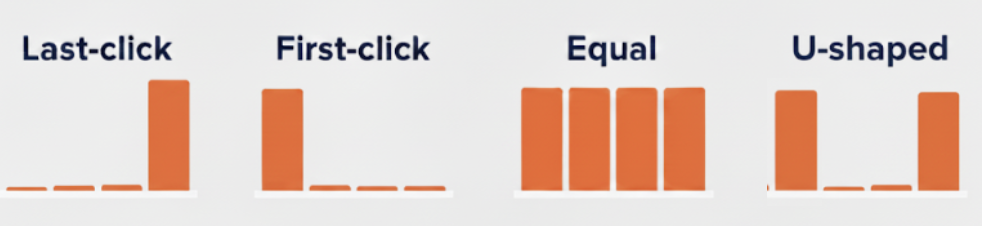
Last click is where you assign the value to the most recent click before purchase
First click is where you assign the value to the first click before purchase
Equal is where you assign the value to each stage of the journey
U-shaped is where you assign the value to the first and last step the most.
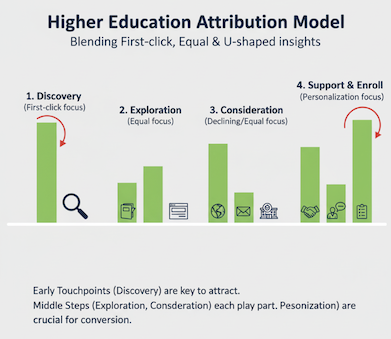
In higher education the attribution should be a mix between first click, U-shaped and equal. The first stage – discovery, is essential to attract them in the funnel. Each step can also be essential and must play a part in a successful conversion. There is no final step, but the final support to help them complete is more intensive like support and personalisation.
What if there is another solution?
Sometimes the attribution problem may not be due to a lack of data in marketing but a sign that there isn’t product market fit. Adapting or redesigning the product may also be a solution.
